• Skip to primary navigation
  • Skip to main content
  • Skip to primary sidebar

Jay Nesbit

Helping Individuals Discover and Unlock Their True Potential

  • Life Well Lived Books
  • About Jay
  • Free Resource Library
  • The Beginner’s Guide to Personal Growth and Success
  • Rise Above the Rut
  • Small Changes BIG RESULTS
  • The 7 Benefits of Retirement Planning
  • My Blog
  • Contact and Contest Form

My Blog

Lifelong learning and the pursuit of happiness

August 20, 2026 by Jay Nesbit

This post is the newest in my Kitchen Table Philosophy series, where I explore the kind of ideas worth sitting with over a slow cup of coffee.

To see previous posts, visit jaynesbit.com/blog.

Kitchen Table Philosophy

The Declaration of Independence gives every one of us three famous rights: life, liberty, and the pursuit of happiness. We talk a lot about the first two. The third one is the one I find most interesting.

The pursuit of happiness. Not happiness handed to you. Not happiness guaranteed. The pursuit of it. An active, ongoing, personal endeavor.

I’ve been pursuing it for a long time now, and one of the clearest things I’ve learned along the way is this: for me, learning and happiness travel together. When I’m curious, engaged, and absorbing something new, I feel most alive. When I stop, something quietly dims.

I don’t think I’m alone in that.

What the pursuit looks like for me

For years now, I’ve made learning a regular part of my life, not as a chore or a credential, but as something closer to a necessity. I take classes through the OLLI programs at Ringling College, Eckerd College, and the University of South Florida, exploring history, sociology, philosophy, and current events alongside people who share the same curiosity. My library card gets a regular workout. I almost always have a book or two going, usually historical fiction, literary fiction, memoir, biography, or history.

It’s just how I’m wired at this point. And I’ve come to believe it’s one of the most direct routes to that thing Jefferson and company were talking about.

What learning actually does for you

There’s solid research behind this. Studies consistently show that people who engage in ongoing learning report higher levels of well-being, stronger cognitive function, and greater resilience as they age. Learning keeps the brain active and adaptable. It builds confidence. It connects you to other curious people. And perhaps most importantly, it gives you something to look forward to.

When you’re learning, you’re growing. And when you’re growing, it’s very hard to feel stuck.

There’s also something quietly powerful about sitting in a classroom or opening a book and admitting that you don’t know everything yet. That posture of openness, of being a student at any age, keeps life feeling expansive rather than shrinking. And an expansive life, I’d argue, is a happy one.

You don’t need a classroom to learn

Formal programs like OLLI are wonderful, but learning doesn’t require enrollment. Here are some other ways worth exploring:

  • Podcasts and audiobooks. Your commute, your walk, your morning routine can all become learning time without adding a single extra hour to your day.
  • Documentaries. A well-made documentary can open a world you never knew existed in under two hours.
  • Travel. Few things teach you more about history, culture, and your own assumptions than going somewhere unfamiliar.
  • Conversation. Seek out people whose life experience differs from yours. Ask more questions than you answer.
  • Writing. Keeping a journal or even a blog forces you to clarify what you actually think, which is a form of learning most people overlook.
  • Museums, lectures, and cultural events. Most cities offer more free and low-cost learning opportunities than people realize.
  • Online courses. Platforms like Coursera, MasterClass, and Khan Academy put world-class instruction within reach of anyone with an internet connection.
  • Community involvement. Joining a group, volunteering, or attending local events exposes you to perspectives and problems you wouldn’t encounter otherwise.

Why it matters beyond yourself

The Declaration of Independence framed happiness as an individual pursuit, but I think the founders understood something deeper. A society of curious, engaged, continuously learning people is more adaptable, more empathetic, and harder to mislead. When people stop learning, they tend to stop questioning. And a life, or a society, that stops questioning tends to stop growing.

Jefferson himself was a voracious reader who believed deeply in public education. He understood that the pursuit of happiness and the pursuit of knowledge were never really separate things.

The simplest argument for lifelong learning

I don’t need a research study to tell me that the weeks I’m most engaged, most curious, and most absorbed in something I’m trying to understand are the weeks I feel best about my life.

That’s enough for me.

Whatever stage of life you’re in, there is something out there worth learning. A subject that has always intrigued you. A skill you never made time for. A period of history you never understood. A question you’ve been carrying around without ever really sitting down with it.

The pursuit is yours. Start there.

What are you learning right now, or what have you always wanted to learn? I’d love to hear it in the comments.
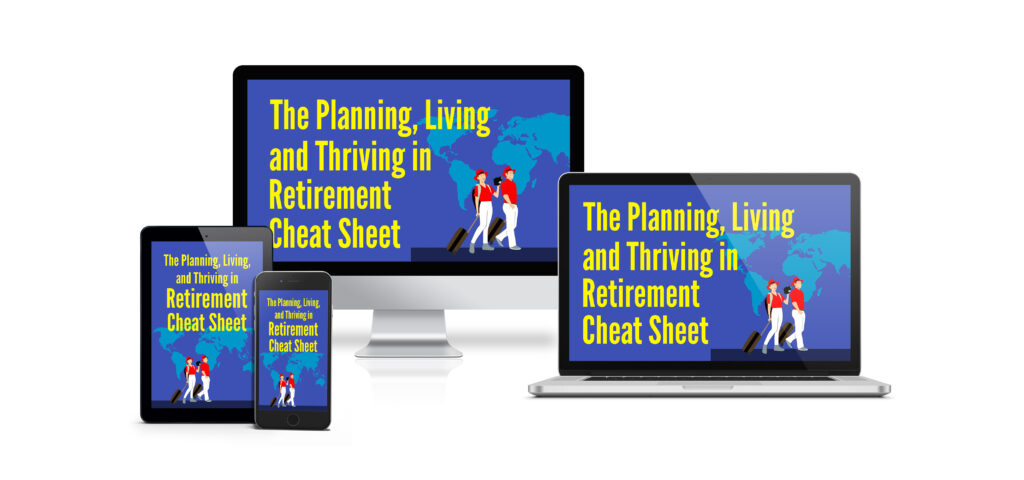
Free Retirement Cheat Sheet
FREE Bonus for Joining my Mailing List

Filed Under: Blogs

What if optimism is an act of courage?

August 6, 2026 by Jay Nesbit

A Kitchen Table Philosophy post on hope, uncertainty, and the most defiant thing you can do right now

Talking kitchen table philosophy

Jay Nesbit is The Pharmacist Wordsmith® and author of Life Well Lived Books©

Nobody knows what tomorrow holds, and yet here we are, making plans.

That tension sits at the heart of one of my favorite quotes, attributed to Martin Luther: “Even if I knew that tomorrow the world would go to pieces, I would still plant my apple tree.”

Read that slowly. It isn’t naive. It isn’t denial. It’s something more courageous than either of those things. It’s a choice to invest in the future anyway, knowing full well that the future is not guaranteed.

I’ve been thinking about that a lot lately.

We live in an era of relentless uncertainty. The news is designed to unsettle us. The economy keeps us guessing. Personal losses arrive without warning. At some point, most of us quietly ask ourselves whether optimism is even a reasonable response to the world as it actually is.

I think it is. But not the soft, breezy kind that pretends problems don’t exist. I mean the defiant kind. The kind that looks clearly at what’s uncertain, what’s broken, what’s genuinely hard, and plants the apple tree anyway.

This post is the newest in my Kitchen Table Philosophy series, where I explore the kind of ideas worth sitting with over a slow cup of coffee. To see previous posts, visit www.jaynesbit.com/blog.

Optimism is not a feeling. It’s a practice.

Waiting until you feel optimistic before acting is a trap. The feeling rarely arrives on schedule. Defiant optimism works the other way around. You act first. You plant first. The feeling follows the doing.

This shows up in small ways every day. You start the project even though you’re not sure it will work out. You repair the relationship even though you can’t guarantee it will hold. You take care of your health even though none of us knows how much time we have. These aren’t acts of innocence. They’re acts of will.

There’s real evidence behind this. People who maintain a future orientation, who believe their actions today matter tomorrow, tend to be more resilient, more engaged, and more satisfied with their lives. Not because things always work out. But because the planting itself gives life meaning.

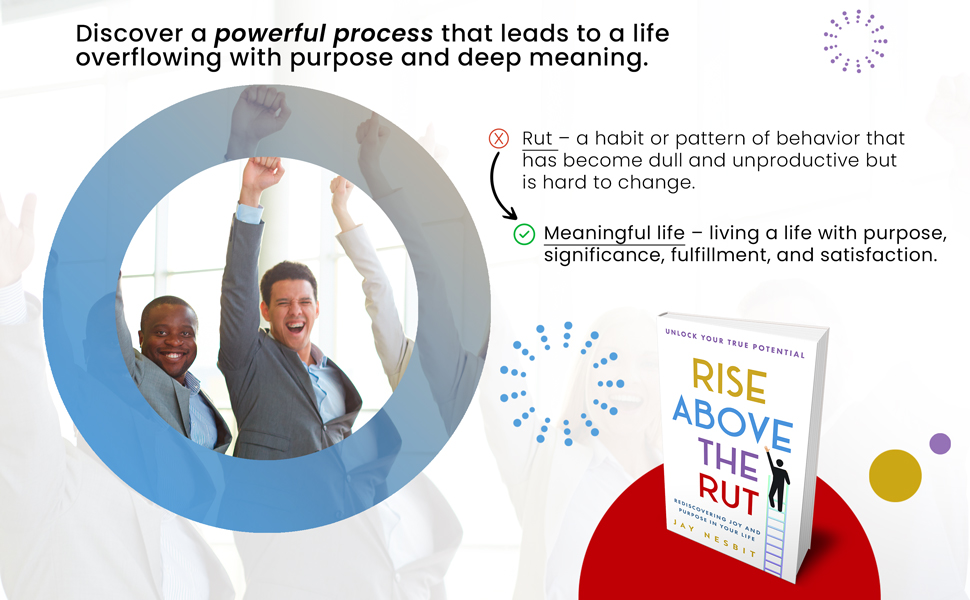
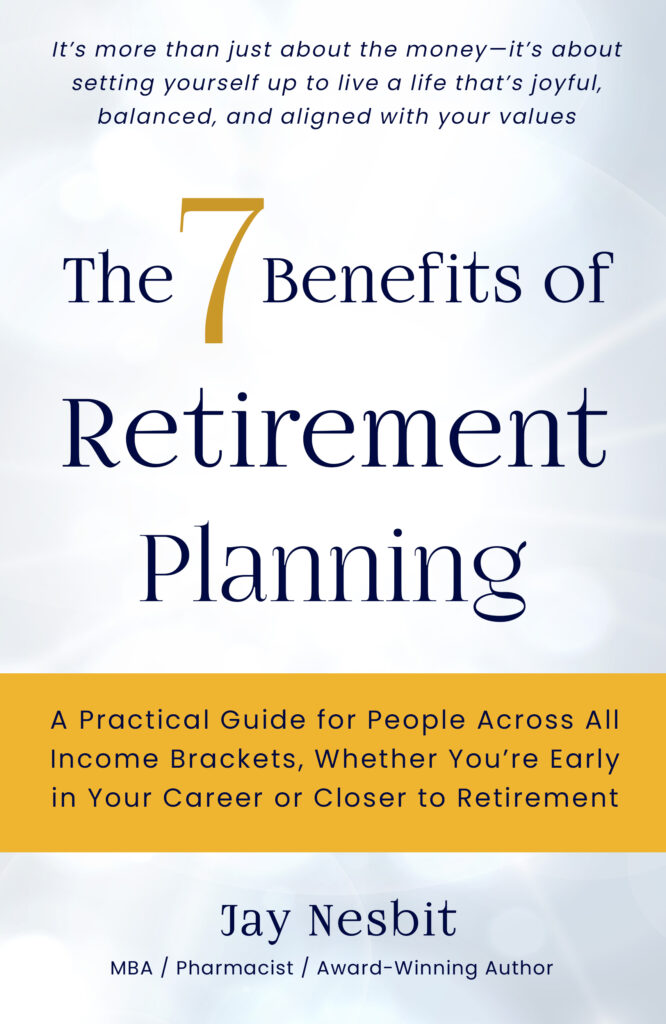
The 7 Benefits o Retirement Planning eBook cover

What are you still waiting to plant?

Most of us have something on hold. A conversation we’ve been putting off. A creative project gathering dust. A relationship that needs tending. A personal goal we’ve quietly shelved because the timing never seems right.

The timing will never be perfect. The world will always offer reasons to wait.

Plant anyway.

Not because success is guaranteed. Not because the ground is ideal. But because the act of planting is itself a statement about who you are and what you believe is worth doing with your one life.

That apple tree won’t plant itself. And tomorrow, whatever it brings, you’ll be glad you didn’t wait.

What’s one thing you’ve been putting off that deserves your attention this week? I’d love to hear it in the comments.
The Pharmacist Wordsmith Logo
Read Previous Blog Posts

Filed Under: Blogs Tagged With: courage, Kitchen Table Philosophy, optimism, resilience, uncertainty

Why Democracy Requires More Than Voting

July 22, 2026 by Jay Nesbit

Kitchen Table discussion

Jay Nesbit is The Pharmacist Wordsmith® and author of Life Well Lived Books©

Have you ever stopped at a red light on an empty road? Waited patiently in line when no one was making you? Paid taxes for schools your children never attended? Accepted the outcome of an election even when your candidate lost?

Most of us do these things without thinking twice. They’re part of the unspoken agreement that makes life with millions of other people possible.

The question is whether we still believe that agreement is worth keeping.

Living in a free society has always required something from each of us. We gain security, opportunity, shared infrastructure, and the rule of law. In return, we surrender a measure of personal freedom. We accept that not every decision will go our way. We agree that sometimes the needs of the community outweigh our individual preferences.

For centuries, philosophers such as Rousseau, Locke, and Hobbes tried to explain this bargain. They called it the social contract. The idea is simple but profound: civilization depends on people willingly giving up a little so everyone can gain a lot.

The real debate was never whether the social contract existed. It was about where to draw the line between individual liberty and shared responsibility.

“Man is born free, and everywhere he is in chains.” — Jean-Jacques Rousseau

Rousseau meant those chains as a provocation—an invitation to ask whether the limits we live under are ones we’ve freely accepted or ones that have simply been imposed on us. More than two centuries later, that question feels as relevant as ever.

At its simplest, the social contract asks us to accept limits on our own behavior for the benefit of everyone else. We stop at red lights even when no one is watching. We respect property that isn’t ours. We pay taxes for schools we may never use. We tolerate neighbors whose lives look nothing like our own. Sometimes we accept decisions we disagree with because that’s how a free society works.

None of this comes naturally, and none of it is free. Each of these choices asks us to set aside a little self-interest for something larger than ourselves—a peaceful community, a functioning society, and a future where millions of strangers can live together without constant conflict.

The social contract has never been a document anyone signs. It’s an ongoing, invisible negotiation — renewed or eroded by the choices each of us makes every day, in ways large and small, seen and unseen.

For much of the twentieth century, that negotiation seemed to work reasonably well. People disagreed—sometimes passionately—but there was a broad understanding that living together required compromise. Institutions were imperfect, but they were generally seen as legitimate. Compromise was frustrating, but it wasn’t viewed as surrender. The other side might have been mistaken, but it wasn’t automatically seen as the enemy.

Today, that shared understanding feels less certain. Public discourse has grown harsher. Trust in institutions has declined. Many people have retreated into communities where their own views are reinforced, while those who think differently are dismissed or ignored. The social contract hasn’t disappeared overnight. It has weakened gradually, one small act of distrust, withdrawal, or self-interest at a time.

That raises an important question: Why? What makes someone conclude that the exchange is no longer worth it—that what society asks of them outweighs what they receive in return?

Part of the answer is economic. When the benefits of living together seem unevenly distributed—when some people believe they’re carrying more of the burden while others enjoy most of the rewards—the willingness to participate begins to erode. Trust weakens when people feel the rules no longer apply equally or the system no longer works for them.

Part of the answer is cultural. We increasingly inhabit separate informational worlds, each with its own facts, its own heroes and villains, and its own explanation for who broke the bargain first. It’s difficult to maintain a shared agreement when people no longer share the same understanding of reality—or even see one another as partners in the same civic project.

And part of the answer is simply human nature. Sacrifice is easier to accept when its purpose is clear and its benefits are visible. In a society as large and complex as ours, that connection is often hard to see. We contribute to systems we’ll never fully understand, for people we’ll never meet, in ways that rarely produce immediate or obvious rewards. When the benefits feel distant or invisible, it’s only natural for people to question whether the bargain is still worth making.

Book Award I received
International Review of Books – Gold Badge

Which brings us to the harder question: Should participating in the social contract be a personal goal? Not just a legal obligation or civic duty, but a conscious choice?

I believe it should—but not blindly.

A healthy society depends on people who are willing to contribute, compromise, and look beyond their own immediate interests. At the same time, history reminds us that citizenship also requires questioning whether the rules are fair and whether the institutions we rely on still deserve our trust.

“We do not have to visit a madhouse to find disordered minds; our planet is the mental institution of the universe.” — Johann Wolfgang von Goethe

Perhaps the goal isn’t obedience. It’s thoughtful participation—to ask not only what society expects of us, but what kind of society we’re helping to create through our own choices.

A few questions to consider:

  • What freedoms or conveniences have you willingly given up for the benefit of your community?
  • Where has the social contract served you well—and where has it fallen short?
  • If the social contract were being rewritten today, what principles would you insist on keeping?

The social contract isn’t something we sign once and forget. It’s renewed—or weakened—by the choices we make every day. Whether we realize it or not, we’re all helping write the next chapter.

— Jay Nesbit | Kitchen Table Philosophy | jaynesbit.com

Published by One Books
www.jaynesbit.com

Filed Under: Blogs Tagged With: Democracy, society

On Luck, Choice, and the Strange Odds of Being You

July 8, 2026 by Jay Nesbit

Jay Nesbit is The Pharmacist Wordsmith® and author of Life Well Lived Books©

You did not have to exist. Neither did I. Run the chain of events back far enough, one missed train, one cancelled plan, one conversation that almost didn’t happen, and neither of us would be here at all. And yet, here we are, reading this together. That ought to stop us in our tracks a little more often than it does.

I’ve been sitting with some big questions lately, the kind that sneak up on you while you’re reading a novel about a woman stuck living the same day over and over. Stick with me here, because it’s not really about the book. It’s about something the book got me thinking about, which is the only kind of book worth reading twice in my opinion.

The Question That Won’t Leave Me Alone

How much of who we are, and what happens to us, comes down to choice and free will, and how much comes down to chance and things entirely beyond our control?

Think about your own life for a second:

  • The job you ended up in
  • The person you married
  • The city you live in
  • The friends sitting around your table

How much of that did you actually choose, deliberately and with full information, versus how much just sort of happened to you because of timing, circumstance, who you happened to bump into, or some decision you made on a whim at twenty-two that you didn’t think twice about?

I look back at my own life and I’ll be honest, I can’t always tell the difference. Some things felt like choices at the time and look like inevitabilities in hindsight. Other things felt completely out of my hands and turned out to be the best decisions I never technically made.

Free Retirement Cheat Sheet
FREE Bonus for Joining my Mailing List

The Harder Question

Then there’s the version of this that’s less fun at the dinner table but probably more important. Why do some people get hit with accidents, illness, or misfortune, while others seem to sail through relatively untouched?

I don’t think there’s a satisfying answer to this. I’ve heard people reach for things like karma, or fate, or “everything happens for a reason,” and I understand the comfort in that, but I don’t think the universe is actually that tidy.

Misfortune doesn’t seem to be handed out according to merit. It just lands where it lands.

That’s a hard thing to sit with, but I think it’s more honest than pretending otherwise.

The Strangeness of Existing at All

And then there’s the question that’s less about fairness and more about sheer improbability: what are the odds that any of us came to exist at all, as the specific person we are, living the specific life we’re living?

When you actually try to trace it back, the particular set of parents, the particular meeting, the particular timing, all the way down generations, the odds are so small they stop being a number and start being something closer to a miracle. None of us were guaranteed. We are, each of us, an enormous long shot that happened to come in.

What I’m Left With

I don’t have a tidy conclusion to wrap this up with, and honestly, I’m suspicious of anyone who claims they do. But I think there’s something worth doing with these questions, even unanswered:

  • They make me a little more forgiving of myself for the things I didn’t choose and couldn’t control
  • They make me a little more compassionate toward people whose hardships I’ll never fully understand the cause of
  • They make me appreciate, every once in a while, the sheer strangeness of being here at all

So here I am, sitting at this table, having these thoughts, on this particular Tuesday that, as far as I know, is not going to repeat itself tomorrow.

That’s enough philosophy for one sitting. Pour yourself something, and let me know what you think.

The Pharmacist Wordsmith Logo
Read Previous Blog Posts

Filed Under: Blogs

Only 25% of people know what makes their life meaningful. Here’s how to find yours.

June 25, 2026 by Jay Nesbit

Jay Nesbit is The Pharmacist Wordsmith® and author of Life Well Lived Books©

Purpose isn’t reserved for the lucky few who figured it out early. It’s something you can uncover — at any age, from wherever you are right now.

Most of us did what we were told. We followed the path that seemed expected — the practical career, the sensible choices, the life that looked right from the outside. And many of us followed those rules faithfully, only to arrive somewhere along the way with a quiet, unsettling feeling that something isn’t quite right.

That feeling has a name. It’s the absence of purpose.

“The mystery of human existence lies not in just staying alive, but in finding something to live for.” — Fyodor Dostoyevsky

According to a 2018 analysis, only about 25% of American adults say they have a clear sense of what makes their lives meaningful. The rest are navigating without a compass — achieving things, staying busy, but not quite sure why any of it matters. The good news is that purpose isn’t a gift some people are born with. It’s something each of us can uncover, if we’re willing to look.

Viktor Frankl, a Holocaust survivor and psychiatrist, built an entire school of thought — Logotherapy — around the idea that human beings are fundamentally driven by the search for meaning. Even in the most unimaginable circumstances, he observed that people who held onto a sense of purpose survived in ways others could not.

The health research echoes this. People with a clear sense of purpose tend to live longer, recover from illness more quickly, and are less likely to experience heart disease and cognitive decline. Purpose isn’t just a nice idea — it’s a life force.

Purpose slips away in two ways: when you let others decide it for you, or when fear keeps you from acting on it. Either one means you never become who you’re meant to be

When you’re living on purpose, you’ll recognize it by how it feels. Things that once felt like a grind start to feel effortless. You have more energy, more courage, more clarity. You lose track of time doing the work. That’s not coincidence — that’s what alignment feels like.

  • What you do feels effortless and engaging
  • Energy and motivation come more easily
  • Courage and passion grow stronger
  • Time seems to disappear
  • The work fully absorbs you
  • A quiet joy comes from being on track

Try it now: write your personal purpose statement

This exercise works best with your journal open. Take your time — there’s no wrong answer, and your statement will evolve as you do.

1- Reflect on these questions first

When do you feel most like your authentic self? What do you do that seems to help or energize others? When you were a child, before anyone told you what was “practical,” what did you want to do? Let your answers sit on the page without judgment.

2 – Use this simple formula

A purpose statement doesn’t need to be poetic. It just needs to be true. Try filling in this structure:

To do [X action] for [Y group of people] to [have Z impact].

Example: “To inspire positive change through writing — using stories, personal experiences, and practical tips — to help people find joy and purpose in life.”

3 – Keep it brief and high-level

One or two sentences is ideal. It should be specific enough to be meaningful, but broad enough to hold up as your life evolves. Make it unmistakably yours.

4 – Read it out loud every day

Writing your purpose down is only the beginning. Reading or saying it daily is what embeds it — turning an idea into an intention, and an intention into a life.

Free Retirement Cheat Sheet
FREE Bonus for Joining my Mailing List

Don’t worry if your statement feels incomplete or uncertain right now. Purpose rarely arrives all at once. It reveals itself gradually, through reflection, through experience, and through paying attention to what lights you up versus what drains you.

The Japanese concept of ikigai — roughly “your reason for being” — is found at the intersection of what you love, what you’re good at, what the world needs, and what you can build a life around. That’s not something you discover in an afternoon. But you can begin today.

And remember: your purpose isn’t permanent. It’s allowed to grow and change as you do. That’s not failure — that’s you becoming more fully yourself.

Want to go deeper?

This post is drawn from chapter 10 of Rise Above the Rut — a practical guide to uncovering who you are, what you’re here to do, and how to start building a life that reflects it. Purpose is just the beginning of the journey inside the book.

Get the book →

Published by One Books
www.jaynesbit.com

Filed Under: Blogs

You can’t change where you’ve been — but here’s how to change where you’re going

June 11, 2026 by Jay Nesbit

Feeling stuck in a long line

Jay Nesbit is The Pharmacist Wordsmith® and author of Life Well Lived Books©

Feeling stuck isn’t a life sentence. It’s a starting point. And knowing exactly where you stand is the first step to moving forward.

At some point, most of us have felt it — that heavy, frustrating sense of being stuck. The goals that never quite get started. The same patterns repeating. The gap between the life you’re living and the life you know you’re capable of.

Here’s the thing nobody tells you: feeling stuck isn’t the opposite of progress. It can actually be the beginning of it — if you’re willing to get honest about where you truly are right now.

“You cannot go back and change the beginning, but you can start where you are now and change the ending.” — Terry McMillan

Before you can chart a path forward, you need a clear and honest picture of your starting point. Not a wishful version of it. Not a softened one. The real, unfiltered truth of where you are — what’s working, what isn’t, and what’s been keeping you in place.

We often stay stuck not because we lack ambition, but because we’re trapped in limiting beliefs, old habits, or assumptions we’ve never stopped to question. Maybe past failures have you expecting defeat before you even begin. Maybe fear has dressed itself up as practicality. Maybe you’ve been so focused on what’s wrong that you’ve lost sight of why moving forward matters.

Avoiding our fears only makes them grow. Facing them — even with a single small step — is what starts to break their hold.

The path out isn’t one giant leap. It’s an honest look at where you are, followed by one small move in the right direction.

The Rx Wordsmith Logo
Click Here to read more blog posts

Try it now: find your real starting point

Grab your journal and set aside 10–15 minutes. Answer these questions as honestly as you can — no softening, no wishful thinking. Just the truth of where you are today.

1 -Name the problem clearly

What exactly is keeping you stuck? Get specific. Vague discomfort is harder to solve than a clearly defined problem. Write it out in one or two sentences.

2 – Drill down to the root cause

Ask yourself “why?” — then ask it again. Keep going until you reach the real source, not just the surface symptom. You want facts, not assumptions.

3 – Connect your goal to a bigger purpose

Why does moving forward actually matter to you? The more meaningful the reason, the more resilient your motivation will be. Link your goal to something larger than the goal itself.

4 – Reflect on these journal prompts

Let these questions guide your thinking. Write whatever comes up — don’t edit or judge it.

What is one thing I can work on today to start making progress?

What am I afraid of — and how can I face it head on?

Where do I feel out of alignment with the things that bring me joy?

What are three things I’m grateful for, even right now?

One more thing worth sitting with: moving forward often requires sacrifice. Letting go of something familiar, saying no to something comfortable, or disappointing someone in the short term. That’s real, and it’s okay to feel the weight of it. But staying stuck has its own cost — one that compounds quietly over time. Thoughtful change, guided by your values, is almost always worth it.

There is no one perfect solution waiting to be discovered. Start by making a list of any options you can think of, even imperfect or half-formed ones. Think broadly. Stay curious. The goal right now isn’t to have all the answers — it’s simply to take the next honest step.

Ready to go deeper?

This post is drawn from chapter 11 of Rise Above the Rut — a practical, step-by-step guide to understanding where you are, uncovering your purpose, and building real momentum toward the life you want. If this resonated, the book will take you the rest of the way.

Get the book →


Filed Under: Blogs

  • Page 1
  • Page 2
  • Page 3
  • Interim pages omitted …
  • Page 14
  • Go to Next Page »

Primary Sidebar

Recent Posts

  • Lifelong learning and the pursuit of happiness
  • What if optimism is an act of courage?
  • Why Democracy Requires More Than Voting
  • On Luck, Choice, and the Strange Odds of Being You
  • Only 25% of people know what makes their life meaningful. Here’s how to find yours.

Recent Comments

  1. Jay Nesbit on The 5 Emotional Stages of Retirement (And How to Deal with Them)
  2. Barbara on The 5 Emotional Stages of Retirement (And How to Deal with Them)
  3. Colette Bartlett on A Life Well Lived at Any Age
  4. Jaylynn Lambert on A Life Well Lived at Any Age
  5. Axel Colton Kevin Sanford on A Life Well Lived at Any Age

Archives

  • August 2026
  • July 2026
  • June 2026
  • May 2026
  • April 2026
  • March 2026
  • February 2026
  • January 2026
  • December 2025
  • November 2025
  • October 2025
  • September 2025
  • August 2025
  • July 2025
  • June 2025
  • May 2025
  • April 2025
  • March 2025
  • February 2025
  • January 2025
  • December 2024
  • November 2024
  • October 2024
  • September 2024
  • August 2024
  • July 2024
  • June 2024
  • May 2024
  • April 2024
  • March 2024
  • February 2024
  • January 2024
  • December 2023
  • November 2023
  • October 2023
  • September 2023
  • June 2023
  • May 2023

Categories

  • Blogs
  • Privacy Policy
  • Terms of Use

Copyright © 2026 ONE BOOKS LLC. All rights reserved.

  • Privacy Policy
  • Terms of Use